
Polygon Geospatial
Providing Geospatial Data Solutions and Mapping to the Extractives Sector.
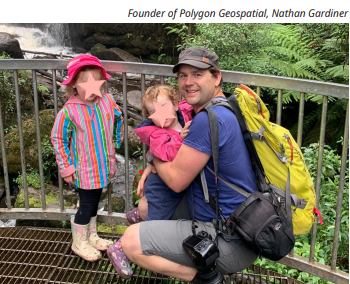
Founder Nathan Gardiner recently worked under the MRSD Act, engaging with Declared Mine owners in the Latrobe Valley on rehabilitation plans; working closely with regulators and operators has given him a strong working knowledge of the Act.
Having worked in remote environments and on oil and gas platforms, he has first-hand experience in high-risk settings.
Polygon Geospatial provides capability built over decades of working with geospatial data in resource projects as professional geologists.
Services include:
- GIS mapping
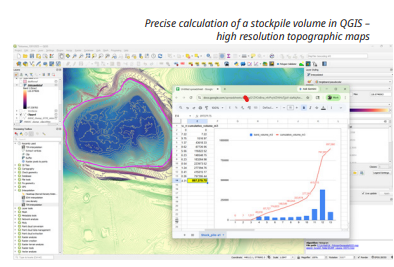
- Data analysis such as stockpile volumes, areas, and topography
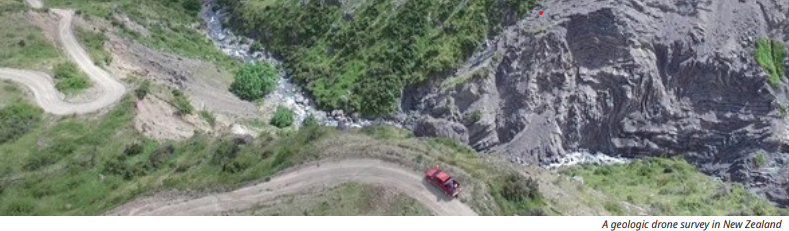
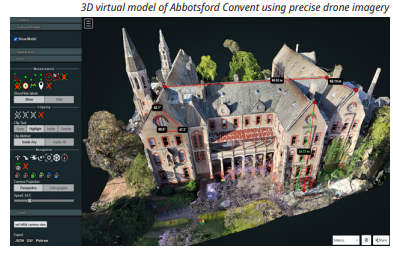
- Capture of orthophotos and topographic data using drones and UAVs
The Path Ahead for Extractives
The MRSD Amendment Act (2023) duty will place responsibility on licence holders to demonstrate that site risks have been clearly documented and are being managed responsibly.
Refer to a review by Minter-Ellison
The new extractives legislation states that license holders will be required to evaluate risks at their sites, and submit this evaluation to regulators for review. Work plans will no longer be required, but the risk rating assigned to each site will determine the level of regulatory oversight, including reporting and audit frequency.
Hazards at quarries are largely spatial in nature, in contrast to hazards at an oil refinery or airline that may be more materials or process-based – think of the function of a pre-flight check list in managing risk.
Earth Resources Regulation (ERR) intends to place greater focus on data reliability as the duty model is introduced. Excavation extents and stockpile volumes, for example, may need to be evaluated and monitored.
Modern GIS software and drone technology are rapid and make these calculations more accurate, and allow repeat surveys over time, to track change and assess hazards. Reduced uncertainty around site hazards, and greater transparency in risk management, is always a positive outcome because it helps keep everyone safe. For licence holders, it also provides clarity about regulatory responsibilities and gives more certainty for business decisions.
Present uncertainty might take time to resolve ERR has not yet explained exactly what it will expect in terms of data reliability or how risk assessments and reporting should be carried out.
“Current budget pressures in the public sector may lead to more compliance work being done from the desktop rather than on site, in order to improve efficiency,” said Nathan.
“With the move away from work plans and prescriptive regulation, there will be greater emphasis on precise geospatial data to demonstrate compliance and manage risk.”
Currently the new duty model will not directly affect bond calculations but how risks are assessed during quarrying will influence rehabilitation liability, and the level of remaining risk after quarrying is completed.
Over $140 million in bonds are being held across more than 860 quarries in Victoria; the government may pay closer attention to these calculations as the duty model is introduced, and to the long-term risk associated with each asset.
Setting the tone
As the duty model is implemented, licence holders will have an opportunity to help shape how quarry regulation is carried out across Victoria.
ERR is still working through how the new model will operate and will need to build the necessary expertise against a background of restructuring and staff reductions.
“Extractive industries can take initiative by adopting best-practice risk management, now standard across many industries, to promote transparency and accountability and reduce unnecessary
regulatory burden.”
Geospatial data is likely to play a key role in quarry and site management, with precise coordinates, auditable volumes, and repeatable surveys providing robust, high-integrity data for assurance and compliance.
Polygon Geospatial recently joined CMPA as an Associate Member. We thank them for representing the interests of small to medium businesses in the quarry industry.